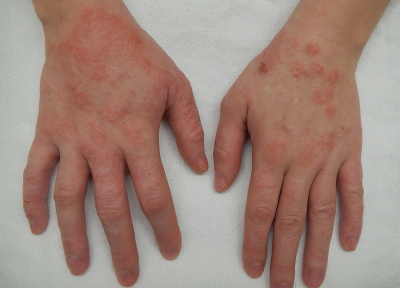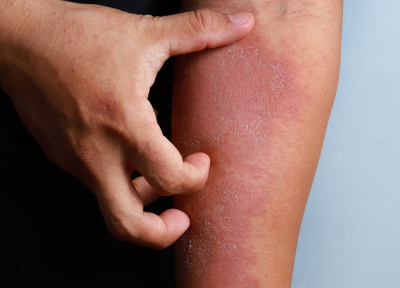

If you or someone you love has atopic dermatitis, the most common type of eczema, you already know it’s more than dry skin. It’s persistent itch, sleepless nights, and skin that cracks and weeps no matter how much lotion you apply. The real story of atopic dermatitis isn’t just at the skin’s surface, it’s the immune system.
What is The Immune System’s Role in Atopic Dermatitis?
Atopic dermatitis is driven by a specific branch of the immune system called type 2 inflammation. This is the same branch responsible for asthma and food allergies. Normally, this part of immunity evolved to fight parasites and repair damaged tissue. In atopic dermatitis, it gets switched on in the skin and won’t switch off because of a combination of genetic and environmental factors.
A few key players run the show. Skin cells called keratinocytes, which form the outer physical barrier of your skin, become damaged and release alarm signals. Those alarms recruit and activate immune cells, that respond by pumping out signaling molecules called cytokines. IL-4, IL-13, and IL-31 are among the most important cytokines in atopic dermatitis.
IL-4 and IL-13 amplify inflammation and further weaken the skin barrier, creating a vicious cycle where a damaged barrier invites more inflammation, and more inflammation damages the barrier further. These cytokines as well as IL-31 also act directly on nerve endings, which is a major reason atopic dermatitis itches so intensely. The itch generated by the immune system talks directly to your nervous system resulting in the redness, thickened skin, and relentless itch-scratch cycle that defines the disease.
How to Treat the Immune System, not Just the Skin
Immunology research over many years has reshaped our understanding of atopic dermatitis and revolutionized its treatment.
Topical therapies, like corticosteroid creams, are applied to the skin and work by damping down inflammation where they are applied. They are useful because they act locally. However, they aren’t selective, meaning they suppress broad swaths of immune activity in the treated area, which is why long-term use can thin the skin or cause other side effects.
Systemic immunosuppressants, like prednisone, go further, dialing down immune activity throughout the entire body. They can be effective for severe disease, but they aren’t targeted to the specific pathway driving atopic dermatitis. Since they turn down immunity as a whole, they carry real risks of increased infection and damage to organs like the kidney and liver.
Targeted biologic treatments represent a game-changing approach. A drug called dupilumab blocks the receptor shared by IL-4 and IL-13, while nemoluzimab blocks the IL-31 receptor. By blocking these receptors the drugs are more targeted and impact the specific signals driving type 2 inflammation rather than the whole immune system. Because they’re aimed precisely at the disease mechanism, they tend to have far fewer systemic side effects than older immunosuppressants.
JAK inhibitors come as oral medications that block an enzyme family (Janus kinases) that act after cytokine signals like IL-4, IL-13, and IL-31 are sent, but before the signal can cause inflammation.These drugs also block other cytokines, which makes them broader than the targeted biologic treatments above, but still far more targeted than older systemic immunosuppressants.
Why we Still Need Better Options
Thanks to years of basic immunology research, we have made tremendous progress in understanding and treating atopic dermatitis. However, even with these advances, treatment remains an unfinished project. A meaningful fraction of patients don’t respond adequately to any single existing therapy. Side effects, even from targeted drugs, still occur and vary from person to person. Perhaps most importantly, atopic dermatitis isn’t driven by one pathway. It’s a network of overlapping cytokines, cell types, and barrier defects, and blocking one node doesn’t always solve the problem. As researchers continue to explore the function of the immune system and how it interacts with cells and nerves in the skin, even more discoveries and therapies will emerge.
Dr. Kaplan is a professor of immunology and dermatology at the University of Pittsburgh.
Download our Atopic Dermatitis Factsheet to learn more!