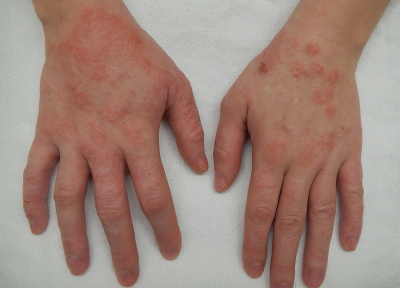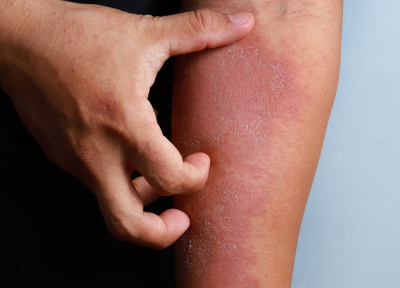

Atopic dermatitis (AD), the most common form of eczema, is more than just dry skin. It is driven by a complex interaction between a weakened skin barrier and an overactive immune response. When the skin barrier is damaged, the immune system receives signals that something is wrong and launches an inflammatory response. In people with AD, this response can become excessive, leading to persistent itching, inflammation, and skin damage.
Researchers have identified two important immune signals involved in this process: thymic stromal lymphopoietin (TSLP) and interleukin-13 (IL-13). These molecules work at different points in the inflammatory response, and scientists are now exploring whether blocking both at the same time could lead to better treatments.
TSLP: The Immune System’s Alarm Signal
TSLP is a signaling molecule, known as a cytokine, that helps tissues communicate with the immune system. It is produced by cells that line barrier tissues such as the skin, lungs, and gut. When the skin barrier is damaged by irritants, allergens, injury, or microbes, skin cells release TSLP as an alarm signal. This alert activates immune cells and helps coordinate an immune response.
TSLP can:
- Activate dendritic cells, which help direct immune responses
- Encourage the development of type 2 immune responses associated with allergies
- Recruit additional inflammatory cells to the affected area
Under normal circumstances, this response helps protect the body. In AD, however, repeated activation of TSLP can contribute to chronic inflammation.
IL-13: A Key Driver of Inflammation
One of the major inflammatory signals activated downstream of TSLP is IL-13. IL-13 is a cytokine associated with type 2 immunity, the branch of the immune system involved in allergic diseases such as asthma, food allergies, and atopic dermatitis.
Several types of immune cells can produce IL-13 during allergic inflammation. Once released, IL-13 acts on both immune cells and skin cells, contributing to several features of AD.
How do TSLP and IL-13 contribute to AD?
TSLP and IL-13 operate at different stages of the same inflammatory pathway. When the skin barrier is damaged, skin cells release TSLP. TSLP then activates immune responses that promote the production of IL-13 and other cytokines. IL-13 subsequently acts on the skin to worsen barrier dysfunction, increase inflammation, and drive itching. This creates a self-reinforcing cycle where itching further damages the skin barrer, causing more TSLP to be released, more IL-13, and so on. Over time, this cycle can make AD a chronic disease that is difficult to control.
Why Target Both TSLP and IL-13?
Many current treatments target a single part of the inflammatory pathway. While this can be effective, other parts of the pathway may continue to drive disease. Researchers are actively investigating whether blocking both TSLP and IL-13 could provide a more comprehensive approach.
Targeting TSLP may help reduce the early activation of inflammatory pathways, whereas targeting IL-13 can reduce inflammation, itching, and skin-barrier damage that occur downstream. Blocking both simultaneously may interrupt the cycle of inflammation more effectively than targeting either signal alone.
New Therapies on the Horizon
Researchers are actively exploring therapies that target both TSLP and IL-13. One example is CM512, a bispecific antibody designed to block both cytokines at the same time. Early preclinical studies suggest that this approach may reduce type 2 inflammatory responses more effectively than therapies targeting either pathway alone.
Another experimental therapy is lunsekimig, a bispecific nanobody that targets both TSLP and IL-13. Although a recent phase 2b clinical trial in moderate-to-severe AD did not meet its primary endpoint, promising results have been reported in other type 2 inflammatory diseases, including asthma and chronic rhinosinusitis.
These findings highlight both the promise and the challenges of developing new therapies for AD. Not every approach will prove effective in every disease, but each study helps researchers better understand the immune pathways involved.
Looking Ahead
Advances in immunology have transformed our understanding of AD. Researchers now recognize that AD is driven by interconnected immune pathways that promote inflammation, itching, and skin-barrier dysfunction.
TSLP and IL-13 represent two important points in this process: one helping to initiate the response and the other helping to sustain it. By targeting both signals simultaneously, researchers hope to more effectively interrupt the cycle of inflammation that drives AD.
While more research is needed, dual targeting of TSLP and IL-13 is an example of how a deeper understanding of the immune system is leading to increasingly precise and personalized treatments for people living with AD.
Araba Abaidoo-Myles is earning her PhD in immunology under Dr. Rebecca Martin at Virginia Commonwealth University.
Download our Atopic Dermatitis Factsheet to learn more!