How the Immune System Responds to Pathogens
The immune system is always on the lookout for pathogens and quickly responding if they enter the body.
On This Page:
Overview
Your body encounters tens of thousands of microbes, like bacteria, viruses, and fungi, every single day. They are all around us in the air, dirt, and on the surfaces we touch. Some of these microbes are pathogens—organisms that can cause disease. The immune system is always on patrol, looking for pathogens that are trying to get in and infect the body. This constant surveillance keeps us healthy, but sometimes pathogens can slip past these defenses.
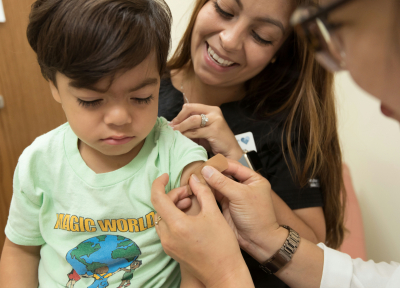
When this happens, the immune system launches a coordinated attack to remove the pathogen from the body and repair any damage. After the pathogen has been removed, the immune system will remember it, so that it can launch a faster, stronger attack the next time. Vaccines use this same process to teach the body to fight and remember pathogens without causing disease.
Key Points
- The immune system is always on the lookout for pathogens and quickly responding if they infect the body.
- When a pathogen begins to infect the body, the immune system launches a coordinated attack to kill the pathogen and remove it from the body, and repair any damage.
- Vaccines induce a similar immune response and memory that your body uses to fight pathogens that you encounter “out-in-the-wild,” like at the grocery store or school, but without causing disease.
How Does Innate Immunity Respond to Pathogens?
Innate immunity is the body’s first line of defense. It includes physical barriers like the skin and mucous membranes, and immune cells that rapidly detect pathogens. If a pathogen gets past the physical barriers, immune cells quickly detect it and begin responding.
Innate immunity is the body’s fast, general defense system. It does not need any advance training or memory to respond to a pathogen, it can respond right away. The innate immune system recognizes common features in microbes, called pathogen-associated molecular patterns (PAMPs). It recognizes these patterns, identifies them as foreign, and responds in a broad but powerful way.
When innate immune cells, such as macrophages and neutrophils, identify a pathogen, they swallow and destroy it. They also send signals that start to recruit other immune cells to the scene. Sometimes the innate immune response is enough to rid the body of a pathogen, but sometimes innate immune cells need to signal for help from the adaptive immune system.
Dendritic cells are considered a bridge between innate and adaptive immunity, the other branch of the immune system. Dendritic cells also swallow and destroy pathogens, but unlike macrophages and neutrophils whose main job is to kill, dendritic cells break the pathogen into parts and share those parts with the cells of the adaptive immune system. While dendritic cells are the experts in sharing, macrophages can also assist with activating adaptive immune cells to induce a more powerful immune response. Much of the sharing of these parts of pathogens, also called antigens, happens in specialized places called lymph nodes, which is why lymph nodes may feel swollen during infection.
How Does the Adaptive Immunity Respond to Pathogens?
Adaptive immunity is the protection your body develops over time from exposure to pathogens. This branch of the immune system recognizes, eliminates, and remembers previously encountered pathogens. The first time your body encounters a pathogen, adaptive immunity is slower to respond than innate immunity, but when activated, it launches a highly targeted attack against the invading pathogen.
There are two main players in adaptive immunity: B cells and T cells. B cells produce antibodies, special proteins that bind to a specific pathogen and mark it for destruction. T cells have many roles, including coordinating the immune response, directly killing infected cells, and helping B cells. Some of the B cells and T cells involved in the response will become highly effective fighters. The most effective cells are kept as long-lived “memory cells” in the body. These memory cells can stick around for years, waiting and ready for the return of the same antigen.
When a pathogen re-enters the body, immune memory allows for a much faster response. Memory B cells can rapidly produce large amounts of highly specific antibodies, while memory T cells can quickly coordinate an attack or destroy infected cells. Because the immune system doesn’t have to “start from scratch,” the response is both faster and stronger than the first time. This rapid response sometimes is so effective you don’t even know you got infected again, or at least you get much less ill and recover more quickly.
How Does the Response End?
Once the immune system has defeated the pathogen, the body clears away dead microbes and damaged cells. Macrophages help this cleanup process by swallowing and breaking down leftover material. The lymphatic system, which includes the lymph nodes, helps filter out destroyed cells and pathogens.
At the same time, signals are sent to turn off the immune response. A type of T cell called regulatory T cells will suppress inflammation from the immune response and calm remaining immune cells. This step is important because an immune response that stays active for too long can cause unnecessary damage to the body. By removing pathogens and debris, and restoring balance, the immune system goes back to patrolling for the next threat.
Sources
- Jain, A., Marshall, J., Buikema, A., Bancroft, T., Kelly, J. P., & Newschaffer, C. J. (2015). Autism Occurrence by MMR Vaccine Status Among US Children With Older Siblings With and Without Autism. JAMA, 313(15), 1534. https://doi.org/10.1001/jama.2015.3077
- Taylor, B., Miller, E., Farrington, Cp., Petropoulos, M.-C., Favot-Mayaud, I., Li, J., & Waight, P. A. (1999). Autism and measles, mumps, and rubella vaccine: no epidemiological evidence for a causal association. The Lancet, 353(9169), 2026–2029. https://doi.org/10.1016/s0140-6736(99)01239-8
- Madsen, K. M., Hviid, A., Vestergaard, M., Schendel, D., Wohlfahrt, J., Thorsen, P., Olsen, J., & Melbye, M. (2002). A Population-Based Study of Measles, Mumps, and Rubella Vaccination and Autism. New England Journal of Medicine, 347(19), 1477–1482. https://doi.org/10.1056/nejmoa021134
Related Topics
Downloads
External Resources
Latest News