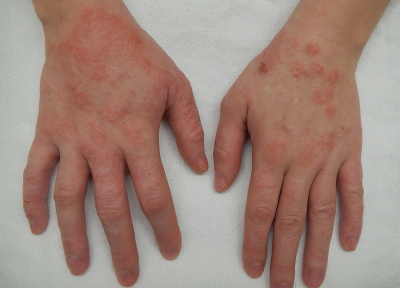

If you have ever watched your child scratch through the night, or hidden your own cracked, inflamed skin under long sleeves in summer, you know that atopic dermatitis (AD), the most common form of eczema, is far more than “dry skin.”
Atopic dermatitis (AD) affects roughly 31 million Americans, and its relentless itch steals sleep, focus, and confidence from entire households. For decades, people whose AD did not improve with creams had few options beyond drugs that dial down the immune system throughout the body. Immunology research helped change that with medicines that block a single target: a protein found on the surfrace of immune cells called IL-4 receptor alpha (IL-4Rα).
Immune receptors like IL-4Rα are specialized parts of cells that detect certain signals. The drug dupilumab (brand name Dupixent) was one of the first designed to block IL-4Rα. To understand how it works, you need to meet two tiny messengers.
Two Messengers, One Shared Antenna
Your immune system coordinates its work using chemical messages called cytokines—think of them as text messages passed between cells. Interleukin-4 (IL-4) and interleukin-13 (IL-13) are two closely related messages that direct a branch of immunity known as the “type 2” response. Normally this branch is useful: it helps helps protect against parasites, contributes to allergic responses, and supports wound healing. When it becomes overactive, though, it fuels allergic disease—not only eczema but also asthma, hay fever, and food allergies, conditions that often travel together in children and run in families.
For a cell to read either message, it needs a receiver on its surface, and here is the key detail: the receptors for IL-4 and for IL-13 are built around the same shared part, IL-4 receptor alpha. It is as if two different apps depend on one antenna for their signal.
When the Messages Will Not Stop
In AD, the type 2 branch is stuck in overdrive. Immune cells in the skin keep sending IL-4 and IL-13, and the consequences pile up. These signals reduce production of important skin-barrier proteins such as filaggrin. In turn, the skin barrier becomes weaker, causing moisture to escape while irritants, allergens, and bacteria can penetrate more easily. These same signals also summon more inflammatory cells and boost IgE, the antibody behind many allergies.
Researchers also discovered that itch-sensing nerves in our skin also carry IL-4Rα. This means that IL-4 and IL-13 can act directly on nerves and make them hypersensitive, so even light touch or sweat can set off ferocious itching. Scratching then tears up the barrier further, letting in more triggers and provoking more IL-4 and IL-13. This itch–scratch–inflame loop is what turns atopic dermatitis from an occasional flare into a chronic, exhausting disease that shapes school, work, and family life.
Block One Antenna, Silence Two Signals
Dupilumab is a monoclonal antibody—a laboratory-made version of the precision-targeting proteins your immune system naturally produces—designed to latch onto IL-4Rα and cover it up. With the shared antenna blocked, neither IL-4 nor IL-13 can deliver its message: one drug, two signals silenced. That is what makes it so effective. Rather than chasing symptoms downstream, it switches off the two signals at the top of the inflammatory chain reaction, so skin cells resume building their barrier, inflammation cools, and the nerves calm down.
In large clinical trials for dupilumab, nearly four in ten adults achieved clear or almost-clear skin within 16 weeks, versus about one in ten on placebo, along with major reductions in itch and better sleep and quality of life. First approved in 2017, dupilumab is now used in patients as young as six months old—and because the same messengers drive other allergic diseases, it also treats conditions such as asthma.
Precision Instead of a Sledgehammer
Older whole-body treatments for AD—steroid pills or immune-suppressing drugs such as cyclosporine—work by turning down the volume on the entire immune system. They can help the skin, but they also turn down defenses against infection, can strain organs, and require regular blood tests. Blocking IL-4Rα is more like muting one noisy group chat while every other conversation continues.
Dupilumab is not a cure, and it does not work for everyone. However, it represents a major shift in how AD is treated. Rather than broadly suppressing the immune system, it targets specific signals known to drive disease. It stands as an example of what immunology research can achieve: identifying the pathways behind a disease and developing treatments that precisely interrupt them. As researchers continue uncovering new immune targets, even more personalized and effective therapies may be on the horizon.
Bilal Khan Mohammed, MBBS, MD, is a Postdoctoral Fellow in Cardiac Surgery and Transplant Immunology at Northwestern University Feinberg School of Medicine.
Download our Atopic Dermatitis Factsheet to learn more!