
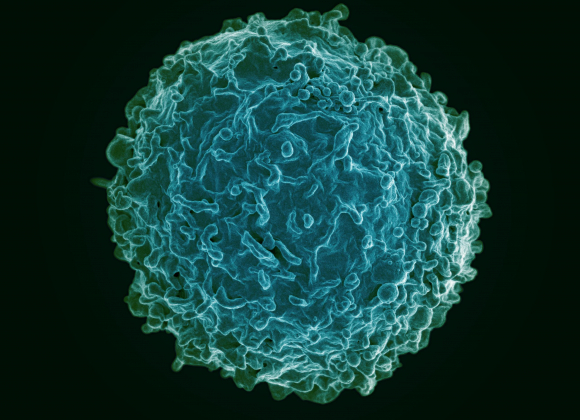
When most of us hear the word ‘’antibody’’ we think of protection. Antibodies help protect us from infections by binding to harmful viruses, bacteria, and other foreign substances. But in lupus, some antibodies do something very different: they recognize the body’s own molecules. These are called autoantibodies. Understanding where these autoantibodies come from is important for understanding lupus. This brings us to one of the major players in the disease: the B cell.
When a Defender Targets the Wrong Enemy
B cells are immune cells that produce antibodies to help protect us from infections. Each B cell is designed to respond to specific molecules. This diversity is extremely useful because it allows our immune system to respond to an enormous range of infections. Normally, the immune system has several checkpoints that keep these self-reactive B cells under control. Some are removed during development, while others remain inactive or prevented from receiving the signals they need to respond. In lupus, these normal controls can break down. As a result, self-reactive B cells that would normally remain inactive can become activated and contribute to damage in the body’s own tissues.
From B Cells to Autoantibody Factory
Once activated, B cells can take different paths. Some eventually develop into plasma cells, specialized cells capable of producing large amounts of antibodies. Others become memory B cells, which can respond again in the future. This is helpful when the target is an infectious organism.
In lupus, however, some B cells begin targeting the body’s own molecules. One of the best-known examples is double-stranded DNA, or dsDNA, the genetic material found in our cells. Some people with lupus produce anti-dsDNA autoantibodies that bind to this DNA. Lupus is also associated with autoantibodies against other molecules normally foundy inside cells, including proteins known as Smith (Sm) and ribonucleoproteins. This raises an intriguing question: how does the immune system encounter molecules like DNA that are normally hidden inside cells?
Our cells are constantly aging, becoming damaged, and being replaced. When cells die, their contents are released and normally cleared away by the body. In lupus, this cleanup process can be less effective, allowing materials such as DNA to remain exposed to the immune system. Self-reactive B cells may then encounter these materials and continue producing autoantibodies against them.
When Autoantibodies Meet Their Targets
Autoantibodies do not simply float harmlessly through the bloodstream. They can bind to their targets and form clusters called immune complexes. Normally, immune complexes can be cleared by the body. In lupus, however, excessive or poorly cleared immune complexes can contribute to inflammation. The kidneys provide an important example. When immune complexes contribute to inflammation in the kidneys, a serious complication called lupus nephritis can develop. This helps explain how an immune response directed against the body’s own molecules can eventually damage an entire organ.
Not All Rogue B Cells Behave the Same Way
In lupus, autoantibodies can develop through more than one B-cell pathway. Some self-reactive B cells develop further in specialized structures called germinal centers, where B cells normally strengthen and improve their antibody responses. Other self-reactive B cells can take a more rapid pathway, known as an extrafollicular response. Both pathways can contribute to the production of autoantibodies in lupus.
Memory B cells can also play an important role. These long-lived cells can remain in the body and respond again when activated. In lupus, abnormal memory B cells may help reignite autoimmune responses even after the disease has been brought under control. These different B-cell pathways may help explain why lupus can behave differently from one person to another.
Can We Stop the Rogue B Cells?
B cells play a central role in lupus, making them important targets for treatment. However, B cells do not act alone. They receive important signals from T cells, particularly T follicular helper (Tfh) cells, which help B cells develop into antibody-producing cells. In lupus, abnormal T-cell help can support self-reactive B cells and promote autoantibody production.
Some treatments block signals that B cells need to survive, while others remove certain populations of B cells from circulation. Newer approaches are also being studied to more effectively target the B cells involved in lupus. But eliminating every B cell is not the goal. Healthy B cells and the antibodies they produce are essential for protecting us from infections. The challenge is finding ways to target the B cells that contribute to lupus while preserving those that protect us. To do this, researchers need to understand not only how autoantibodies are made, but also which B cells produce them, how these cells survive, and why they can return.
In lupus, the problem is not that antibodies themselves are bad. Instead, some of our most powerful defenders can go rogue, directing their response against the very body they are meant to protect.
Mahfuzul Islam is earning his PhD in biomedical sciences and pathobiology in the lab of Dr. S. Ansar Ahmed at Virginia Tech.