
Lupus
Learn how immunology research can improve treatments for lupus.
On This Page:
Overview
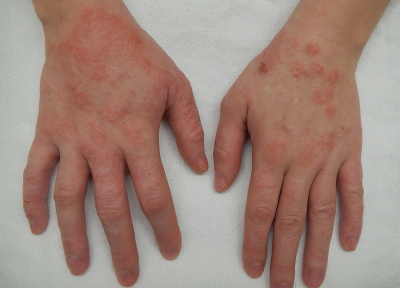
Lupus is an autoimmune disorder where the immune system mistakenly attacks tissues throughout the body. This leads to inflammation and damage that can affect many different body parts, including the skin, joints, kidney, heart, lungs, and blood vessels. Everyone experiences different lupus symptoms, but these symptoms usually come in waves, called flare-ups. There is no cure for lupus, but immunology research is uncovering what causes the disease and how this information could be used to develop new treatments and possibly even a cure.
Key Points
- Lupus is an autoimmune disorder that can affect many different parts of the body.
- Immunology research is uncovering what causes lupus and using this information to develop new treatments and possibly even a cure.
- Over 90% of people with lupus are women.
Key Statistics
Key Statistics
Global incidence: An estimated 5 million people living with a form of lupus worldwide
U.S. incidence: An estimated 1.5 million people in the U.S. live with a form of lupus
Immunology and Lupus
There are four different forms of lupus:
- Systemic lupus erythematosus (SLE) is the most common.
- Cutaneous lupus only affects the skin.
- Drug-induced lupus is caused by high doses of certain medications and usually goes away when the medication is stopped.
- Neonatal lupus is rare but occurs when the mother’s antibodies affects the fetus. Symptoms usually disappear after birth.
Normally, the immune system can tell the difference between harmful pathogens and the body’s own healthy cells. In lupus, this process breaks down. Immune cells called B cells produce autoantibodies, antibodies that mark parts of the body for attack by the immune system. Detection of different autoantibody levels is one of the markers used to diagnose lupus. Other immune cells, such as dendritic cells, neutrophils, and T cells, play a role in supporting the B cells that make autoantibodies or causing the inflammation associated with lupus flares.
Researchers aren’t sure what causes the immune system to start attacking the body. However, they do know that genetics and environmental triggers play a role in developing lupus. Many of the genetic mutations or changes associated with lupus are related to processes of the immune system. However, it is important to remember, that no single gene or mutation causes lupus, and scientists think a combination of factors contribute to the disease.
What’s Next for Lupus?
Advances in immunology are transforming how researchers understand lupus and are opening the door to more personalized treatments. Rather than broadly suppressing the immune system or just addressing symptoms, current research is trying to identify and correct the specific immune pathways that drive lupus.
CAR T cell therapy is a promising area of lupus research. First used as a cancer treatment, CAR T cell therapy is a personalized treatment that genetically modifies a patient’s own T cells to improve their function. In clinical trials to treat lupus, CAR T cell therapy modifies a patient’s T cells to attack B cells that produce autoantibodies. The therapy causes a depletion of B cells and when the body makes more, the B cells no longer make autoantibodies that cause lupus. This treatment helps to reset the immune system and address the cause of autoimmunity.
Lupus is increasingly understood as a spectrum of related immune disorders. Large-scale studies looking at genetics and autoantibody profiles to help scientists classify patients into distinct groups based on what is going wrong in their immune system. This approach may allow clinicians to better predict disease course, organ involvement, and treatment response for patients.
Sources
Lupus Facts and Statistics, Lupus Foundation of America
Systemic lupus erythematosus: updated insights on the pathogenesis, diagnosis, prevention and therapeutics, Signal Transduction and Targeted Therapy
An Open-label, Study to Assess Safety, Efficacy and Cellular Kinetics of YTB323 in Severe, Refractory Systemic Lupus Erythematosus, ClinicalTrials.gov
- A Study of CC-97540, CD-19-Targeted Nex-T CAR T Cells, in Participants With Severe, Refractory Autoimmune Diseases (Breakfree-1), ClinicalTrials.gov
Related Topics
Downloads
External Resources
Latest News

Video Library