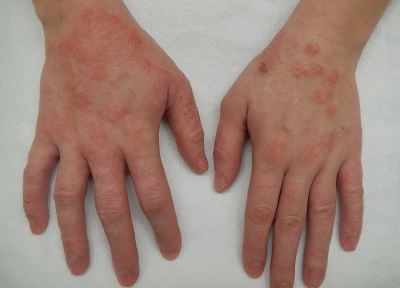
When most people think of asthma, they think of a wheezing and using an inhaler. What most people don’t realize is that asthma is a disease of the immune system.
How Does the Immune System Cause Asthma?
The cells that line our airways work like a security system. When they detect an allergen, irritant, virus, or even the cold, dry air we breathe in during exercise, they send out chemical signals that recruit immune cells to the airways. In asthma, that response is overactive and doesn’t shut off properly. The airways become inflamed, swollen, and hypersensitive, which causes these airways to narrow, creating chest tightness and wheezing. The immune cells cause an excess of mucus production, causing, excessive coughing. Due to a variety of triggers for asthma, people will not all have the exact same experiences. Likewise, a treatment that helps one individual may do little for another.
Living with Asthma
I grew up battling severe asthma. Every year, the change of seasons would trigger my disease and I would spend days in the hospital. I remember the breathing treatments, the waiting, the unanswered questions: Why did this happen? Why every year? Was it getting worse? Mostly, my family and I were left in the dark, which was almost as scary as the condition itself. I was confused, and my parents, who were always so worried, were left just as puzzled.
Those questions stayed with me until my freshman year of college, when I met a researcher who introduced me to translational research: the science of turning laboratory discoveries into real-world solutions. His research had nothing to do with asthma. He studied cyanobacteria, a type of microbe that can help protect soil from erosion, and I was fascinated. If a microbe studied in the lab could help protect soil, what could discoveries about the immune system do for a condition as devastating as asthma? Now I want to apply translational research to the immune system, to bridge the gap between what immunologists understand and creating new, effective treatments for asthma.
How Can Immunology Research Improve Asthma Treatment?
What does this look like for asthma? For many people, inhalers are enough to keep their asthma under control. For those with severe asthma, flare-ups can persist, even with high doses of daily inhaled medicines. Newer treatments called biologics, which are lab-made antibodies usually given as an injection, can block specific immune signals to calm the overactive response. One such antibody, tezepelumab, targets TSLP, an alarm signal that is released when the cells lining your airways sense a threat. Previously exisitng biologics act further down this chain reaction, blocking signals that drive inflammation after the alarm has already sounded. Because tezepelumab blocks the alarm itself, near the top of the chain, it may also help people whose asthma isn’t driven by allergies.
In a large late-stage clinical trial (a phase 3 trial) called NAVIGATOR, more than 1,000 adolescents and adults with severe, uncontrolled asthma received an injection of either tezepelumab or a placebo (an inactive look-alike) every four weeks for one year. Patients who received tezepelumab had 56% fewer flare-ups than those who received the placebo, regardless of their asthma trigger. In a follow-up analysis of the same trial, patients who received tezepelumab had 79% fewer flare-ups severe enough to require hospitalization or an emergency room visit, and the benefit was consistent across all seasons, including the time of year that led to my numerous hospital visits as a child.
For patients, these results could mean fewer nights waking up gasping for air, fewer emergency trips to the hospital, and less fear for families listening to a loved one struggle to breathe in the next room. Of course, tezepelumab will not work for everyone, and researchers are still working to identify which patients benefit the most. But a therapy that targets one of the earliest immune signals behind asthma may also ease another burden for people with asthma and their families: not understanding what is happening in the body, and the fear that comes with it. That is the comfort my family needed, and I want to give this comfort to every patient asking these same questions through my own research someday.
Mohammed Salman is an undergraduate student in medical microbiology and undergraduate researcher at Arizona State University. Expert review for this blog was provided by Dr. Stephanie James, Associate Professor of Pharmaceutical Science at Regis University.