The smallpox virus caused death and devastation for centuries, killing an estimated 500 million people over 3,000 years. Today, smallpox is no longer a threat to human health, and people do not need to be vaccinated against it because the the virus is no longer found anywhere in the world (though two labs have reference samples). So, how did we eradicate this deadly virus worldwide?
A Deadly Disease
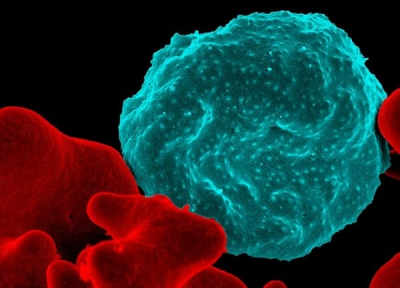
Smallpox, caused by the variola virus, spread through communities for thousands of years. Smallpox-like scars found on Egyptian mummies suggest that the disease was already ravaging communities 3,000 years ago. Highly infectious, smallpox killed about three out of every ten people who caught it. Three hundred million people died from smallpox in the 20th century alone.The disease could kill within a matter of weeks, and serious complications such as lung infections, and multi-organ failure were common. Many people who survived were left with lifelong scars or blindness.
Early attempts to protect against the virus included variolation, in which material from the sores of a person with smallpox was deliberately scratched into the skin of a healthy person. This usually caused a milder illness that left the person protected. But variolation was risky: some people developed full-blown smallpox, and because they carried live smallpox virus, they could pass it to others and spark new outbreaks.
Who Made the First Vaccine?
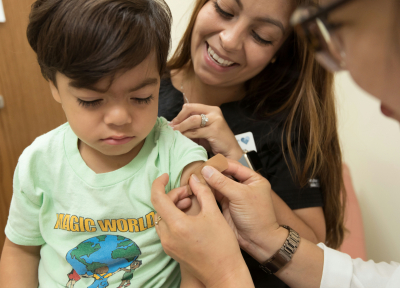
An English physician named Edward Jenner noticed that milkmaids who had previously caught cowpox did not get smallpox. Cowpox, which causes sores on cows’ udders, is caused by a virus related to the smallpox virus, but causes much milder illness in people. Jenner hypothesized that deliberately infecting people with cowpox, instead of variolation with smallpox, could protect against smallpox more safely. In 1796, he performed the first vaccination by transferring material from a milkmaid’s cowpox sores to James Phipps, the 8-year-old son of his gardener. When Jenner later exposed Phipps to smallpox, the boy never got sick. Jenner repeated the vaccination with other people, who were similarly protected against smallpox. The cowpox-based vaccine was far safer than variolation, and smallpox became the first disease for which a vaccine was developed. In fact, the word “vaccination” comes from the term Jenner used for cowpox, Variolae vaccinae (“smallpox of the cow”), which itself comes from the Latin word “vacca,” meaning cow.
The ability of the vaccine to protect against smallpox, is based on immune memory. When the immune system encounters cowpox from the vaccine, it learns how to fight the virus and parts of the immune system hold on to a “memory” of the invader. Since smallpox and cowpox are closely related, when the immune system encounters smallpox virus later, it recognizes it as similar uses what it learned to fight cowpox on the smallpox virus.
How Did We Eradicate Smallpox?
After Jenner published his findings, vaccination spread around the world, and many governments supported efforts to prevent and control smallpox. Later, scientists built on Jenner’s work, and by the 1950s they had developed heat-stable, freeze-dried smallpox vaccines that could be stored without refrigeration—making it possible to vaccinate people in hot and remote parts of the world. In 1959, the World Health Organization (WHO) launched the Smallpox Eradication Programme, and it redoubled its efforts in 1967 with the Intensified Smallpox Eradication Programme.
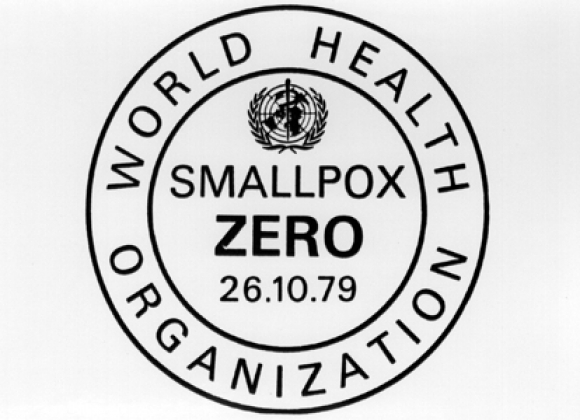
Rather than trying to vaccinate everyone, health workers used a more efficient and cost-effective strategy called ring vaccination. They tracked down each new case of smallpox and vaccinated the people around that person, creating a protective “ring” that stopped the virus from spreading. This strategy was very effective but labor-intensive, requiring collaboration between governments as well as widespread involvement from local health workers and surveillance officers. Even at the height of the Cold War, Soviet and American epidemiologists worked side by side on the eradication effort. During a large smallpox outbreak in southwestern India in 1970, all available national and international health workers were mobilized to conduct a house-by-house search of the area, containing the outbreak in weeks. Country by country, smallpox disappeared. The last naturally occurring case was recorded in Somalia in 1977, and in 1980 the World Health Assembly officially declared the world smallpox-free. Smallpox remains the first and only human infectious disease to be eradicated—an accomplishment widely considered to be one of the greatest public health achievements of all time.
The vaccination campaign against smallpox wiped one of the deadliest diseases in history from the face of the Earth. Because the campaign was so successful, smallpox is no longer a threat to human health, and the general public no longer needs to be vaccinated against it. The campaign to eradicate smallpox is a testament to the power we have to fight infectious disease when scientists, governments, communities, and individuals worldwide work together towards a shared goal to improve human health.
Rebecca Horowitz is an MD-PhD candidate at Tulane University where she earning both a Doctor of Medicine (MD) degree and a research-focused PhD in immunology and microbiology in the lab of Dr. James McLachlan.