Much of immunology focuses on the “big players” of the immune system: B cells and T cells. These cells are part of the body’s adaptive immune system and can remember specific pathogens helping the body respond faster in the future.
But the immune system has another important arm: the innate immune system. This system responds quickly to signs of infection or abnormal cells in the body.
Some immune cells don’t fit neatly into one specific arm of the immune system. Natural kill cells, or NK cells, are one of them.
What are Natural Killer Cells?
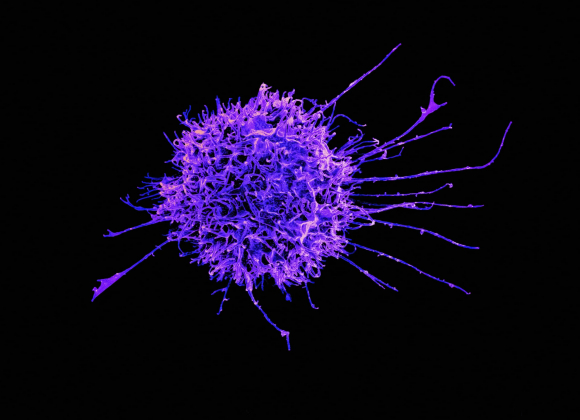
NK cells are a type of immune cell discovered in the 1970s that specialize in identifying and killing abnormal cells, such as virus-infected cells or cancer cells. They do this using receptors—structures on their surface that act like locks waiting for the right key. When these receptors detect certain signals, the NK cell is activated. Once activated, NK cells can kill abnormal cells (such as cancer cells) directly, as well as release signaling molecules called cytokines to recruit other immune cells.
Unlike B cells and T cells, NK cells do not rely on recognizing a single specific target. Instead, they are tuned to detect signs that a cell is unhealthy or behaving abnormally.
How Do NK Cells Connect to the Adaptive Immune System?
Although NK cells are often considered part of the innate immune system, they also interact with the adaptive immune system through antibodies—proteins that bind to and “flag” specific targets, such as infected or cancerous cells.
NK cells have a special receptor called CD16A, which allows them to recognize these flagged cells. When CD16A binds to an antibody attached to a cell, it triggers the NK cell to destroy that cell. This is called antibody-dependent cellular cytotoxicity, or ADCC, a natural process that can be exploited for cancer treatment.
Why Does This Matter for Cancer Treatment?
ADCC is one way that some cancer treatments work. Certain therapies use antibodies designed to attach to cancer cells. Once attached, these antibodies act like markers, directing NK cells to find and destroy those cells. The effectiveness of these treatments can depend in part on how well NK cells carry out ADCC. Researchers are looking at a variety of ways to target this process as a way to make cancer treatments more effective. For example, scientists are exploring ways to enhance NK cell activity, designing antibodies that bind the cancer cells more effectively, and increasing how strongly receptors like CD16A respond.
Why NK Cells Matter
NK cells may not receive as much attention as other immune cells, but they play a critical role in protecting the body. CD16A on their surface allows them to play a role in the adaptive immune system, killing pathogens or cancer cells in an antibody dependent manner. Although ADCC is an important mechanism for treatment effectiveness, there are still roadblocks when it comes to considering NK cells in cancer immunotherapies. As scientists learn more about how NK cells function, they may become an even more powerful tool in fighting disease.
Zainab Hakeem is earning her PhD in biochemistry and molecular biology under Dr. Adam Barb at the University of Georgia.